
COMPLIANCE
Built around human oversight in surveying. AI assists, it doesn’t replace judgement.
Sitarva is designed around transparency, human oversight and clear accountability – principles that underpin responsible AI use in surveying practice.
COMPLIANCE CONTROLS
Transparency by design
Raw Voice Evidence Log
The raw voice transcription is appended to every final report as a verifiable record of the observations captured during the inspection.
Sitarva Assisted Processing
Surveyors can disable AI assistance at any time and continue using Sitarva with fully manual data entry.
AI Output & Review Controls
Sitarva applies defined controls around how AI-assisted content is organised, reviewed and presented, keeping the surveyor in control of the final output.
OUR APPROACH
AI that assists. Surveyors who decide.
- Sitarva organises what you say, nothing more, nothing less
- Every AI-populated field can be reviewed and edited before the report is generated
- AI assistance does not replace surveying expertise or decision-making
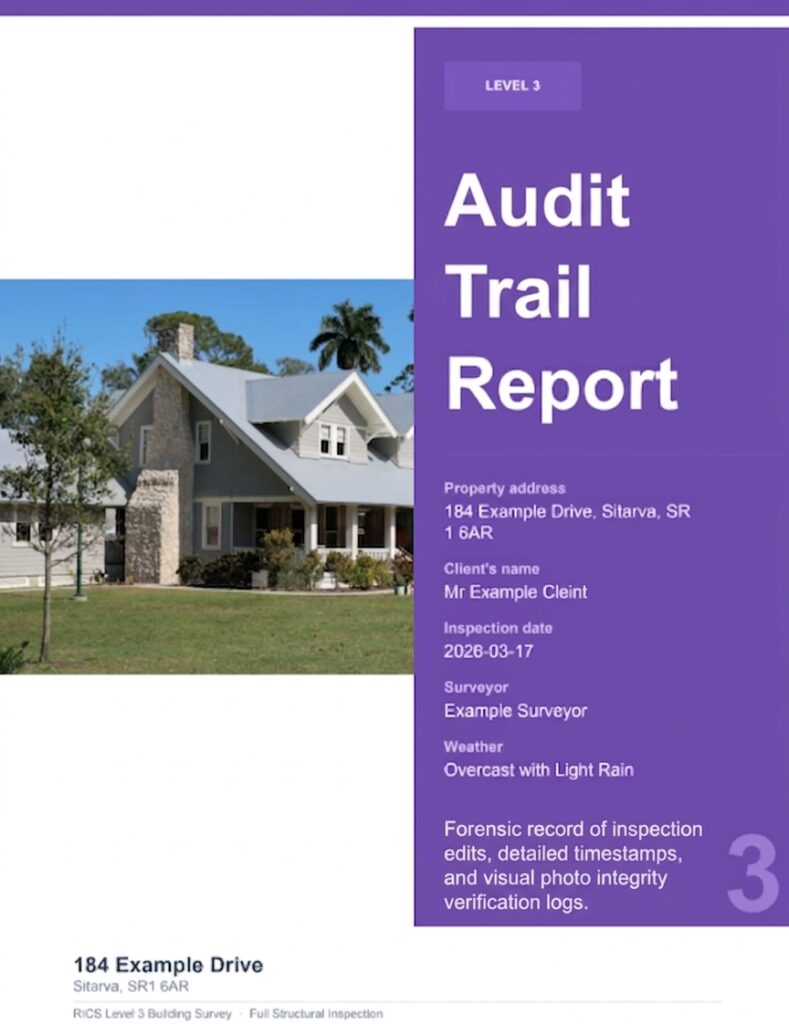
- Full audit trail, with observations timestamped and traceable
THE GUARDRAILS
10 product-level guardrails
- Every guardrail is a product-level design constraint
- No invented assumptions - Sitarva works from what the surveyor records
- Observations, edits and evidence remain traceable through the inspection record
- Built around clear AI principles and human oversight
These constraints define how Sitarva processes survey information, keeping the system focused on recorded evidence.
1. Zero-Invention Guardrail
1. Zero-Invention Guardrail
▲
2. Observation ≠ Diagnosis Guardrail
2. Observation ≠ Diagnosis Guardrail
▲
3. Cause Containment Guardrail
3. Cause Containment Guardrail
▲
4. Biological Growth Separation Guardrail
4. Biological Growth Separation Guardrail
▲
5. Section Lock Guardrail
5. Section Lock Guardrail
▲
6. Concealed Components Guardrail
6. Concealed Components Guardrail
▲
7. Repair Neutrality Guardrail
7. Repair Neutrality Guardrail
▲
8. Contradiction Detection Guardrail
8. Contradiction Detection Guardrail
▲
9. Immediate Hazard Override
9. Immediate Hazard Override Guardrail
▲
10. Human Authority Guardrail
10. Human Authority Guardrail
▲GOVERNANCE & TECHNICAL STANDARDS
A bounded-logic environment. Not open-ended AI.
AI-assisted content remains subject to the surveyor’s review. The surveyor can edit, reject or amend the output before approving the final output.
- Outputs are constrained by defined product rules and section boundaries, not unrestricted generation
- The system does not introduce condition, cause or performance claims beyond the recorded evidence
- Processing remains within the relevant report section and survey scope
- Defined product controls take precedence over stylistic or narrative generation
1. Multi-Agent Orchestration Architecture
2. Zero-Invention & Scribe Accuracy Mandate
The system is designed to restate, structure and clarify information provided by the surveyor, rather than introducing unsupported observations or conclusions.
3. Reality Filter
A validation layer checks for potentially inconsistent or non-standard inputs and can flag information requiring review before it is carried forward.
4. Liability & Risk Control Protocols
Multiple controls are designed to reduce overreach, speculation and misrepresentation, including contradiction detection, scope controls and human review requirements.
5. Bounded inputs
Sitarva works from the observations, evidence and information captured by the surveyor. It is not designed to fill gaps with information that was never recorded.
6. Section-locked processing
Observations are processed within the context of the report section they relate to, helping prevent information from one part of the inspection being incorrectly applied to another.
7. Defined report structures
AI-assisted drafting works within predefined report formats and section structures rather than producing unrestricted narrative from a general-purpose prompt.
8. Scope boundaries
Outputs are constrained by the scope of the recorded observations and the relevant survey context, helping prevent the system from expanding beyond the information provided.
9. No independent professional judgement
Sitarva does not independently assess building conditions, determine risk or reach professional conclusions. Those decisions remain with the surveyor.
10. Human review before issue
AI-assisted content is presented for surveyor review before the report is issued. The surveyor can edit, reject or amend the output before approving the final report.
RESPONSIBLE OUTPUT
Built around responsible AI use in surveying
Sitarva is designed around principles of transparency, human oversight and accountability when AI is used to support surveying work. AI assists with the process; the surveyor remains in control of the output.
Transparency
AI-assisted content is identifiable within the Sitarva workflow, so the surveyor can see where AI has been used to build the report.
Human oversight
Surveyors review and edit AI-populated content before the report is generated. Nothing is issued without final human review.
Accountability
Responsibility remains with the surveyor. Sitarva assists with capture and organisation, it does not make independent surveying decisions.
Compliance position summary
Designed around clear AI controls.
The surveyor remains in control of the final report, including its findings and conclusions.
in practice
Built around a surveyor, not instead of them
You capture it
Your observations and evidence come from the inspection. Sitarva organises what you record and does not invent what wasn't captured.
Sitarva structures it
AI assistance organises your recorded information into the appropriate report format, within defined controls and section boundaries.
You decide
You review, edit and approve the report before it leaves your hands. Sitarva provides the framework and assistance; you make the final call.
SEE IT IN ACTION
READY TO SEE IT IN PRACTICE?
Capture the inspection. Preserve the context.
See how Sitarva turns spoken observations and on-site evidence into finished draft report sections.